
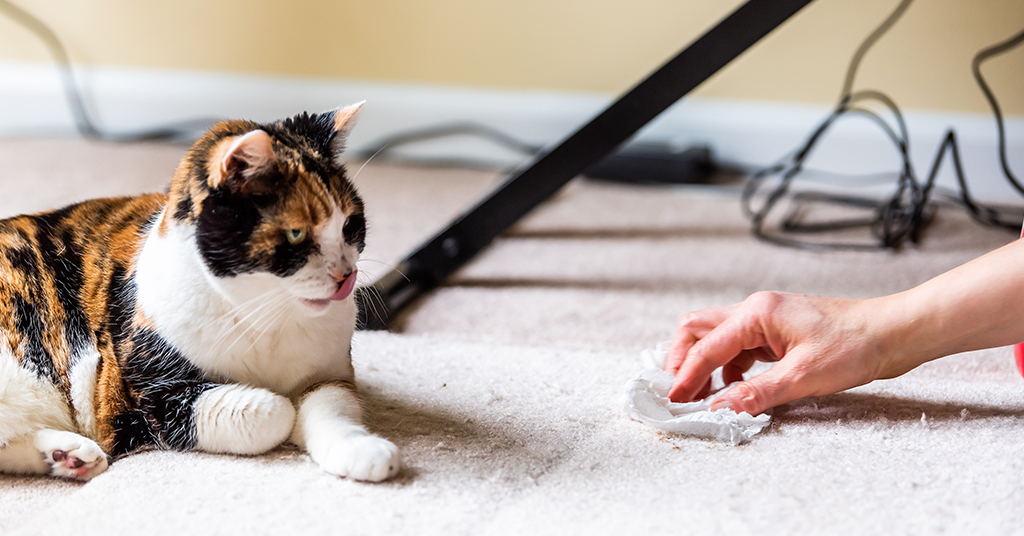
Cat vomiting is not normal, even though many owners think of occasional hairballs as just part of life with a cat. While a rare hairball may not signal a problem, frequent vomiting, vomiting with other symptoms, or a sudden change in your cat’s habits can point to conditions such as food sensitivities, inflammatory bowel disease, kidney disease, hyperthyroidism, or an intestinal blockage. Cats are experts at masking discomfort, so the way they vomit and what they bring up often provide the first clues that something deeper is going on. At Veazie Veterinary Clinic, a Cat Friendly Practice serving Veazie, Bangor, and Orono, we help cat owners figure out whether a vomiting episode is a minor blip or a reason to schedule an exam. This guide explains the common reasons behind cat vomiting, what different types of vomit can mean, which symptoms deserve attention, and how veterinarians diagnose and treat the problem.
Why Is My Cat Throwing Up?
Cats throw up for many reasons, ranging from eating too quickly to serious internal disease, and the pattern matters as much as the event itself.
A cat that vomits once after gulping breakfast and then acts completely normal is in a very different situation from a cat that vomits several times a week or seems tired and uninterested in food. Veterinarians often describe the difference as acute versus chronic. Acute vomiting starts suddenly and may last a day or two. Chronic cat vomiting continues for weeks or recurs regularly.
Vomiting vs. Regurgitation
It helps to know whether your cat is truly vomiting or regurgitating. Vomiting is an active process. You’ll often see heaving, abdominal contractions, and drooling beforehand, and the material usually comes from the stomach or upper intestine. Regurgitation is passive. Food or fluid comes back up from the esophagus with little effort, often shortly after eating, and may still look like a tube-shaped mass of undigested food. Sharing which one you observed helps your veterinarian narrow down the cause.
Are Hairballs Normal?
Cats swallow loose hair while grooming, and most of it passes through the digestive tract. Occasional hairballs can happen, particularly in long-haired cats, but frequent hairballs and hairball-related cat vomiting may signal excessive grooming from skin problems or stress, or slowed movement through the gut.
Causes of Cat Vomiting
The list of possible causes is long, which is why recurring cat vomiting deserves a professional evaluation.
Veterinarians commonly see cat vomiting related to the following:
- Dietary factors: Eating too fast, sudden food changes, or food allergies and intolerances
- Hairballs: Especially in long-haired breeds or cats that overgroom
- Foreign objects: String, ribbon, hair ties, and toy pieces that cause blockages
- Toxins: Lilies, certain household cleaners, and human medications
- Inflammatory bowel disease (IBD): Chronic inflammation of the digestive tract
- Kidney disease: A buildup of waste products that causes nausea
- Hyperthyroidism: An overactive thyroid common in middle-aged and senior cats
- Pancreatitis, liver disease, or diabetes
- Intestinal parasites and infections
- Gastrointestinal cancer, such as intestinal lymphoma in older cats
Lilies deserve a special mention. Every part of the plant, including the pollen and vase water, is highly toxic to cats and can cause kidney failure. Vomiting after any lily exposure is an emergency.
What Does Your Cat’s Vomit Look Like?
The appearance of your cat’s vomit can offer helpful information for your veterinarian, so it’s worth noting before you clean it up.
Taking a quick photo on your phone can be useful. While appearance alone can’t confirm a diagnosis, these general patterns are worth knowing:
Common Appearances
Undigested food soon after a meal may suggest eating too fast or regurgitation. A tubular clump of hair is a classic hairball. Clear, foamy liquid or white foam may occur with an empty stomach or irritation. Yellow or green fluid usually contains bile from the small intestine, which can happen when the stomach is empty or with digestive disease.
Appearances That Need Prompt Attention
Red blood or material that looks like coffee grounds may indicate bleeding in the stomach or intestines. Brown, foul-smelling vomit can point to an intestinal obstruction. String, plastic, or other objects suggest your cat may have swallowed more of the same. Any of these warrants a call to your veterinarian the same day.
Cat Vomiting Symptoms to Look Out For
Cat vomiting rarely tells the whole story on its own, so watch for other changes that accompany it.
Cats with an underlying illness often show subtle signs that owners may not connect to vomiting at first. Keep an eye out for:
- Decreased appetite or skipping meals
- Weight loss, even when your cat seems to eat normally
- Increased thirst or urination
- Diarrhea, constipation, or changes in litter box habits
- Hiding, lethargy, or reduced interest in play
- Drooling or lip licking, which can signal nausea
- A dull or unkempt coat
- Hunched posture or sensitivity when the belly is touched
Tracking how often your cat vomits, what the vomit looks like, and whether any of these other signs appear gives your veterinarian a much clearer picture during the exam.
When to Worry About Vomiting in Cats
Some episodes of cat vomiting call for an emergency visit, while others are best addressed at a scheduled appointment soon.
Seek Care Immediately If Your Cat:
Vomits repeatedly within a few hours, vomits blood, cannot keep water down, seems weak or collapses, has a swollen or painful belly, tries to vomit without producing anything, or may have eaten a lily, string, medication, or another toxin. Kittens, senior cats, and cats with known health conditions also warrant faster attention. During business hours, contact Veazie Veterinary Clinic at (207) 941-8840. After hours, go to the nearest emergency animal hospital.
Schedule an Appointment If:
Your cat vomits more than once or twice a month, has frequent hairballs, has lost weight, or shows any of the subtle symptoms described above. Ongoing cat vomiting, even when your cat otherwise seems fine, often has a treatable cause that is easier to manage when caught early.
How Veterinarians Diagnose Vomiting in Cats
Finding the reason behind cat vomiting starts with a detailed history and a careful physical exam.
Your veterinarian will ask about the timing and frequency of vomiting, your cat’s diet, any recent changes at home, and access to plants, strings, or medications. During the exam, the team will feel the abdomen, check hydration, and evaluate the thyroid gland, heart, and mouth.
Diagnostic Testing
Depending on the findings, testing may include bloodwork to evaluate the kidneys, liver, pancreas, and thyroid, as well as a urinalysis and fecal testing. Abdominal X-rays can reveal foreign objects or gas patterns that suggest a blockage, while an abdominal ultrasound gives a detailed look at the intestinal walls, pancreas, and lymph nodes. In cases of chronic vomiting, biopsies may be needed to distinguish IBD from intestinal lymphoma, since the two can look similar on other tests.
Cat Vomiting Treatment
Cat vomiting treatment depends entirely on the underlying cause, which is why an accurate diagnosis comes first.
For acute cases, your veterinarian may provide anti-nausea medication, fluid therapy to correct dehydration, and a short-term prescription diet that is gentle on the stomach. Cats with foreign object obstructions may need endoscopy or surgery to remove the item. Chronic conditions require longer-term management, such as a hypoallergenic or novel protein diet for food sensitivities, medications for IBD or hyperthyroidism, or kidney support for cats with renal disease. Hairball-prone cats may benefit from a plan your veterinarian tailors to their coat, grooming habits, and digestive health.
Please avoid giving over-the-counter or human medications for cat vomiting. Many are toxic to cats, and some can mask symptoms of a serious problem. Follow-up visits help your veterinarian confirm that the treatment is working and adjust it as needed.
Getting to the Bottom of Your Cat’s Upset Stomach
Hairballs may seem like a routine part of cat ownership, but cat vomiting of any kind is worth paying attention to. Noting how often it happens, what it looks like, and whether other symptoms appear can make a real difference in how quickly your veterinarian finds the cause. Many conditions behind recurring vomiting, from food sensitivities to thyroid disease, respond well to treatment once they are identified.
Veazie Veterinary Clinic offers a calm, cat-focused environment along with in-house laboratory testing, radiology, and ultrasound to help get to the root of your cat’s digestive troubles. If your cat has been throwing up more often than usual, call us at (207) 941-8840 to schedule an exam. We’ll work with you to find answers and help your cat feel comfortable again.