
Cat hairballs are something most cat owners have encountered, whether as a warning sound in the middle of the night or an unpleasant discovery on the carpet. Hairballs in cats are common, but “common” doesn’t always mean normal, and it definitely doesn’t mean you should ignore them. Understanding what causes hairballs, what they look like, and when they signal a problem worth discussing with your veterinarian can make a real difference in your cat’s comfort and long-term health.
What Is a Cat Hairball?
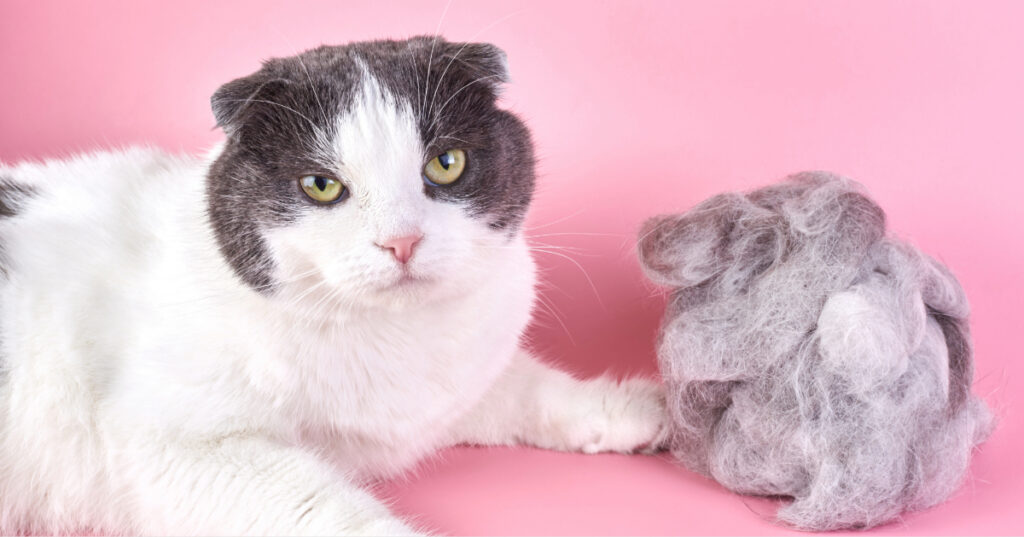
A hairball is a clump of hair that accumulates in a cat’s stomach and is eventually vomited up. The medical term is trichobezoar. Cats are meticulous groomers, and during grooming they swallow loose hair. Most of that hair passes through the digestive tract without issue, but some of it can collect in the stomach and form a mass that the cat expels by retching and vomiting.
Despite being called hairballs, these masses are rarely ball-shaped. Most cat hairballs are elongated, tube-like clumps of compacted hair, sometimes with a small amount of digestive fluid coating them. They can range from about an inch to several inches in length.
Are Hairballs Normal in Cats?
Occasional hairballs in cats are considered a normal, if unpleasant, part of feline life. For most healthy cats, producing a hairball once every week or two is not cause for alarm. Cats with longer or denser coats, or cats who groom more frequently than average, tend to produce hairballs more often.
That said, there is a threshold at which hairballs shift from an expected nuisance to a health concern. Frequent, repeated hairball episodes (multiple times a week) or hairballs that seem to cause your cat significant distress are worth discussing with your veterinarian. Our team at Veazie Veterinary Clinic in Bangor, ME regularly helps cat owners evaluate whether their cat’s hairball frequency is within normal range or a sign of an underlying condition.
What Causes Frequent Hairballs in Cats?
When a cat is producing hairballs more often than expected, the underlying cause is usually related to one of several factors.
Excessive Grooming
Some cats over-groom due to stress, skin conditions, allergies, or parasites like fleas. A cat who grooms compulsively ingests more hair than average, increasing hairball frequency. If you notice your cat grooming to the point of creating bald patches or irritated skin, this is a separate concern that also deserves veterinary attention.
Digestive Motility Issues
Cats whose digestive systems move more slowly than normal may have more difficulty passing ingested hair through the GI tract. When hair doesn’t move through efficiently, it accumulates in the stomach and forms hairballs more readily. Digestive motility can be affected by diet, age, hydration, and certain medical conditions.
Diet and Fiber Intake
Fiber plays a role in how well a cat’s digestive tract moves ingested hair along. Cats eating diets low in fiber may be more prone to hairball formation. Your veterinarian can help assess whether a dietary adjustment might reduce your cat’s hairball frequency.
What Does a Cat Hairball Look Like vs. Vomit?
It’s easy to confuse cat hairball vomiting with regular vomiting. Both involve retching and expelling stomach contents, but there are differences worth knowing.
Hairball vs. Vomit: Key Differences
- Hairball: Contains a visible, compacted clump of hair; often tubular or cylindrical in shape; may be covered in mucus or digestive fluid
- Food vomit: Contains undigested or partially digested food; typically doesn’t contain a hair mass; may be expelled shortly after eating
- Bile vomit: Watery, yellow or greenish liquid; no food or hair present; often occurs when the stomach is empty
If your cat is retching repeatedly but nothing comes up, or producing liquid vomit without a hair mass, that is not a typical hairball episode. Repeated unproductive retching is a red flag that warrants a veterinary call.
When Are Cat Hairballs a Medical Emergency?
Most cat hairballs are expelled without incident, but there is a scenario where they become dangerous: gastrointestinal obstruction. A large hairball that becomes lodged in the intestines rather than the stomach can cause a blockage that prevents food and fluid from passing through the digestive tract. This is a life-threatening emergency.
Signs a Hairball Has Become an Emergency
- Repeated retching or gagging for more than 24 hours without producing a hairball
- Loss of appetite lasting more than 24 hours
- Lethargy or weakness
- Distended or painful abdomen
- Constipation or no bowel movements
- Vomiting that doesn’t stop
If your cat shows any combination of these signs, contact Veazie Veterinary Clinic or an emergency veterinary clinic immediately. An intestinal blockage caused by a hairball requires prompt diagnosis and treatment.
How Can I Tell If My Cat’s Hairball Habit Is Getting Worse?
Cat owners who know their pet’s normal routine are usually the first to notice a change in hairball frequency or severity. If your cat has always produced the occasional hairball but you’ve noticed an uptick in frequency, or if the episodes seem to be causing more distress than they used to, it’s worth keeping a log and sharing it with your veterinarian.
A change in hairball frequency can sometimes signal changes in grooming behavior, diet, digestive health, or general wellness. Our veterinarians at Veazie Veterinary Clinic can help you determine whether what’s happening is expected variation or a reason to investigate further.
How Do Vets Diagnose Hairball Problems in Cats?
If your cat’s hairball frequency is a concern, a veterinary exam will typically begin with a physical assessment and a detailed discussion of your cat’s history including their diet, grooming behavior, activity level, and the pattern of hairball episodes.
Depending on those findings, your veterinarian may recommend diagnostics such as abdominal X-rays or ultrasound to look for a blockage or other abnormality, bloodwork to assess overall health and rule out underlying diseases, or a dietary evaluation to identify whether nutrition is a contributing factor. The goal is always to understand what’s driving the issue and address it appropriately.
What Helps Reduce Hairballs in Cats?
While there’s no way to eliminate hairballs entirely for most cats, there are strategies that can reduce how often they occur. Your veterinarian is the best resource for personalized guidance based on your individual cat’s health, coat type, and diet.
Veterinarian-Recommended Hairball Management Approaches
- Regular brushing and grooming to remove loose hair before your cat ingests it
- Prescription or veterinarian-recommended hairball-control diets formulated to promote digestive motility
- Addressing any underlying condition such as allergies or skin problems driving excessive grooming
- Increasing hydration, which supports healthy digestive function
Over-the-counter hairball remedies are widely available, but it’s worth having a conversation with your veterinarian before using them regularly, especially in cats with any known health conditions.
What Every Bangor, ME Cat Owner Should Know
Maine’s cold, dry winters can reduce indoor humidity, and lower moisture levels in the air may contribute to mild dehydration in cats, which can slow digestive motility and increase the likelihood of cat hairball formation. Keeping fresh water available at all times and considering a pet fountain to encourage drinking is especially helpful during the long New England winter months.
If you have questions about your cat’s hairball frequency or overall digestive health, the team at Veazie Veterinary Clinic in Bangor, ME is ready to help. Whether it’s a routine wellness visit or a concern about something that doesn’t seem quite right, our veterinarians at Veazie Veterinary Clinic are here to give your cat the thorough, caring evaluation they deserve.
When to Stop Wondering and Start Calling
Hairballs in cats are a normal part of feline life, up to a point. When they become frequent, distressing, or accompanied by symptoms like lethargy or appetite loss, they’re telling you something. Pay attention to what your cat’s body is communicating, and don’t hesitate to reach out to Veazie Veterinary Clinic in Bangor, ME with any concerns. Call (207) 941-8840 to book an appointment for your pet. Your cat will thank you for it.