If you’ve ever heard your dog make a sudden, honking, snorting sound that seems to come out of nowhere, you may have witnessed reverse sneezing. Reverse sneezing in dogs is one of the more startling things a pet owner can experience, especially the first time. But in most cases, it’s completely harmless and understanding what’s happening can go a long way toward easing your worry.
What Is Reverse Sneezing in Dogs?
Reverse sneezing, also called inspiratory paroxysmal respiration or pharyngeal gag reflex, is a reflexive response in which a dog rapidly and forcefully inhales through the nose, producing a distinctive snorting, honking, or gagging sound. Unlike a regular sneeze (which expels air outward), a reverse sneeze pulls air inward in rapid, repetitive bursts.
During a reverse sneezing episode, a dog will typically stand still, extend their neck, and make a loud snorting or honking noise that can last anywhere from a few seconds to a minute or two. The dog’s eyes may bulge slightly, and their chest may heave. Most dogs look alarmed during the episode, which in turn alarms their owner.
What Causes Reverse Sneezing in Dogs?
A reverse sneeze is triggered by irritation or inflammation in the nasal passages, throat, or soft palate, causing a spasm of the throat muscles. Many different things can set off this response.
Common Triggers of Reverse Sneezing
- Allergens such as pollen, dust, or mold in the environment
- Strong scents, including perfumes, cleaning products, or air fresheners
- Nasal irritants like smoke or dust
- Eating or drinking too quickly
- Pulling on a leash or collar that puts pressure on the throat
- Post-nasal drip from a respiratory infection or allergies
- Foreign material, such as a blade of grass, in the nasal passage
- Excitement or sudden physical activity
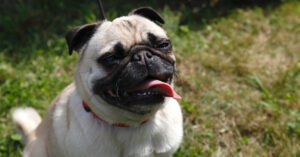
Reverse sneezing in dogs is more commonly reported in small breeds and brachycephalic dogs, which are those with short, flat faces like Pugs, Bulldogs, and Shih Tzus. Their compressed anatomy makes them more prone to throat and airway irritation. However, reverse sneezing can occur in any dog, regardless of breed or size.
Is Reverse Sneezing Dangerous for Dogs?
In the vast majority of cases, reverse sneezing in dogs is not dangerous. The episode resolves on its own, and the dog returns to normal immediately afterward with no lasting effects. It may look alarming in the moment, but dogs are generally not in distress during a reverse sneezing episode the way they might appear to be.
That said, there are situations where what looks like reverse sneezing may be something more serious. If you’re not sure whether what you’re seeing is a reverse sneeze or a different kind of respiratory event, a veterinary evaluation can provide clarity and peace of mind.
How Do I Know If It’s Reverse Sneezing or Something Else?
The challenge with reverse sneezing in dogs is that it can look similar to other conditions, some of which do require medical attention. Collapsing trachea, kennel cough, nasal discharge from infection, and even seizures can sometimes be mistaken for reverse sneezing.
Reverse Sneezing vs. Other Conditions
- Reverse sneezing: Sudden, episodic; dog is standing and conscious; resolves completely on its own; no other symptoms before or after
- Collapsing trachea: Produces a dry, honking cough; often triggered by excitement or exercise; may be persistent; common in small breeds
- Kennel cough (infectious tracheobronchitis): Produces a hacking, forceful cough, sometimes with retching; may produce mucus; contagious; doesn’t resolve as quickly as a reverse sneeze
- Choking: Dog is clearly distressed; may paw at face; does not resolve on its own; requires immediate action
If you’re unsure what you’re observing, recording a video on your phone during an episode can be incredibly helpful when you bring your dog to Veazie Veterinary Clinic in Bangor, ME. Veterinarians can review the footage and help determine exactly what’s happening.
When Should You See a Vet About Reverse Sneezing?
Occasional reverse sneezing that resolves quickly and doesn’t affect your dog’s quality of life is generally not cause for a veterinary visit. However, there are circumstances where a professional evaluation is warranted.
Schedule a Vet Visit If Your Dog’s Reverse Sneezing:
- Is occurring much more frequently than it used to
- Lasts longer than a minute or two per episode
- Is accompanied by nasal discharge, nosebleeds, or facial swelling
- Is paired with coughing, gagging, or difficulty breathing between episodes
- Seems to be worsening over time
- Is happening in a puppy or a senior dog for the first time
- Is affecting your dog’s sleep, appetite, or activity level
Increased frequency of reverse sneezing can sometimes indicate the presence of nasal polyps, nasal mites, a foreign object lodged in the nasal passage, or an upper respiratory infection. Our veterinary team at Veazie Veterinary Clinic will take a thorough history and perform a physical examination to determine whether further diagnostics are needed.
How Do Veterinarians Evaluate Reverse Sneezing in Dogs?
When a dog comes to Veazie Veterinary Clinic with a history of frequent or concerning reverse sneezing episodes, our veterinarians will start with a complete physical exam, including a careful evaluation of the throat, nasal passages, and lymph nodes. If the exam raises questions, additional diagnostics may include rhinoscopy (a scope of the nasal passages), X-rays, nasal flush, or allergy testing.
Treatment, if needed, depends entirely on the underlying cause. Allergies may be managed with antihistamines or other medications. Nasal mites require specific treatment. Structural issues, particularly in brachycephalic dogs, may be addressed surgically to improve airflow. In many cases, no treatment is needed beyond identifying and minimizing the triggers.
Can You Stop a Dog’s Reverse Sneeze in the Moment?
Many pet owners find that gently covering the dog’s nostrils for a moment, briefly stopping airflow to trigger a swallow, can help end a reverse sneezing episode more quickly. Some find that gentle stroking or calm reassurance helps. However, if your dog is in true distress, forcing interaction may increase their anxiety.
Most episodes end on their own within 30 to 60 seconds. The best thing you can do in the moment is stay calm, observe, and allow your dog to recover naturally. Panicking tends to make things worse for both of you.
Reverse Sneezing and Bangor Dogs
Maine’s seasons bring a range of airborne triggers that can aggravate reverse sneezing in dogs. Spring and fall pollen, summer humidity, and winter dry air from indoor heating can all irritate nasal passages and increase episode frequency. Dogs with known allergies or brachycephalic breeds may be especially sensitive during seasonal transitions. Keeping indoor air clean and minimizing exposure to strong airborne irritants can help.
Our veterinary team at Veazie Veterinary Clinic is experienced in evaluating and supporting dogs of all breeds experiencing respiratory concerns in the Bangor area. If your dog’s reverse sneezing has you worried, don’t hesitate to call and discuss what you’re seeing.
That Scary Sound Is Usually Nothing to Fear
Reverse sneezing in dogs is almost always benign, but it’s completely understandable to feel alarmed when you hear it for the first time. Now that you know what it is and what to watch for, you’re better equipped to tell the difference between a harmless sneezing spasm and something that needs attention. If you have any doubt at all, reach out to Veazie Veterinary Clinic in Bangor, ME. Call us at (207) 941-8840. A quick call or visit can settle the question and give you confidence that your dog is just fine.