A dog’s hot spot needs professional help when it’s growing rapidly, oozing, or causing your dog significant pain and distress and with hot spots, that point can arrive within hours. These raw, inflamed patches of skin are one of the fastest-moving conditions veterinarians treat, and what looks manageable at first glance often involves a deeper infection that won’t resolve without the right diagnosis and treatment. If you’ve spotted your dog obsessively licking, chewing, or scratching a wet, matted area of skin, read on.
What Is a Hot Spot on a Dog?
A hot spot, also called acute moist dermatitis or pyotraumatic dermatitis, is a localized skin infection that develops when bacteria multiply in a warm, moist area of skin. The infection causes intense itching, which drives your dog to lick and chew the site compulsively. That scratching and chewing further damages the skin and creates a cycle of irritation and infection that can escalate rapidly.
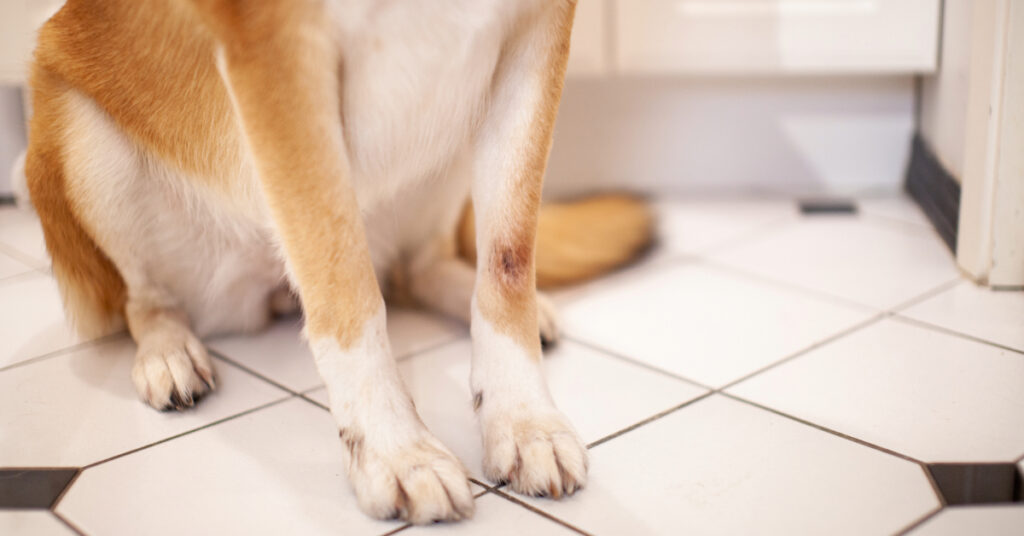
Hot spots on dogs can appear anywhere on the body but are most commonly found on the head, neck, hips, and the base of the tail. They often look like a wet, matted patch of fur with raw, red, oozing skin underneath. They can grow from the size of a quarter to several inches across within just 24 hours.
What Causes Hot Spots in Dogs?
Anything that causes your dog to scratch, lick, or chew a particular area can trigger a hot spot. The underlying cause matters because treating the hot spot without addressing the root issue often leads to recurrence.
Common Triggers for Dog Hot Spots
- Allergies including environmental, food-related, or contact
- Flea bites and flea allergy dermatitis
- Ear infections that cause a dog to scratch near the head and neck
- Anal gland problems that prompt excessive scooting and chewing near the tail
- Matted or wet fur that traps moisture against the skin
- Insect bites or skin irritation from grooming products
- Orthopedic pain that leads a dog to lick a joint area repeatedly
Hot spots are more common in dogs with dense coats or those who spend time in water, since moisture gets trapped close to the skin. Breeds like Golden Retrievers, Labrador Retrievers, St. Bernards, and German Shepherds tend to be more prone to hot spots on their skin.
How Do I Know If My Dog Has a Hot Spot?
Dog hot spots are usually hard to miss once you know what to look for. The affected area typically has a distinctive appearance and your dog will be clearly uncomfortable.
Signs of a Hot Spot on a Dog
The most recognizable signs of hot spots in dogs include a well-defined patch of red, moist, and inflamed skin that may be covered or hidden by matted fur. Your dog will likely be persistently licking, chewing, biting, or scratching the area. The skin may be weeping or oozing, and the area will typically be warm to the touch, hence the name. Your dog may also be sensitive or reactive if you try to touch or examine the spot. In some cases, the fur around the hot spot falls out, revealing the raw skin beneath. The lesion may have a foul smell if the bacterial infection has progressed.
Can I Treat My Dog’s Hot Spot at Home?
Many pet owners want to manage their dog’s hot spot at home, but this is an area where veterinary guidance matters. Hot spots can look deceptively simple on the surface while involving a deeper or spreading infection underneath. Without the right diagnosis and treatment, hot spots on dogs frequently worsen and can develop into larger, more serious skin infections.
Our veterinary team at Veazie Veterinary Clinic in Bangor, ME sees hot spot cases regularly and understands how quickly they can progress. A proper veterinary evaluation allows the team to determine the depth and extent of the infection, identify any underlying cause, and prescribe the appropriate treatment.
When Should You Take Your Dog to the Vet for a Hot Spot?
Any dog with a suspected hot spot benefits from a veterinary visit, but some situations are more urgent than others.
See a Vet Promptly If the Hot Spot:
- Is larger than a quarter, or grew quickly within hours
- Appears deep, crusty, or has a strong odor
- Is located on the face, near the eye, or in a skin fold
- Is causing your dog significant distress, pain, or loss of sleep
- Has not improved within 24 hours
- Is one of multiple hot spots appearing simultaneously
- Is accompanied by fever, lethargy, or swollen lymph nodes
Multiple hot spots appearing at once or recurring hot spots are particularly important to evaluate professionally. This pattern often signals an underlying condition, like allergies or a chronic skin disorder, that needs its own treatment plan.
How Do Veterinarians Treat Hot Spots on Dogs?
When your dog is examined for a hot spot at Veazie Veterinary Clinic, our veterinary team will begin by clipping the fur around the lesion to expose the full extent of the affected area and allow it to dry out. Moisture is the enemy of a healing hot spot, and the skin needs airflow to recover.
Typical Hot Spot Treatment Components
Treatment for a dog hot spot generally involves gentle cleaning and disinfection of the wound, along with medications to address the infection and inflammation. Your veterinarian may prescribe topical treatments applied directly to the skin, oral antibiotics if the infection has spread, and anti-itch medications or short-term steroids to break the itch-scratch cycle. An e-collar (the cone of shame) is often a necessary part of treatment to prevent your dog from re-traumatizing the area while it heals.
If an underlying cause is identified such as ear mites, fleas, or allergies that condition will be addressed alongside the hot spot treatment. Treating just the skin without resolving the trigger is like patching a leak without fixing the pipe.
How Long Does It Take for a Dog’s Hot Spot to Heal?
With appropriate veterinary treatment, most hot spots on dogs begin to improve noticeably within a few days. Full healing typically takes one to two weeks, depending on the size and depth of the lesion. Larger or more severe hot spots may take longer.
Healing is most successful when the dog is prevented from licking the area, the skin stays clean and dry, and the full course of prescribed medication is completed. Stopping treatment early, even when the hot spot looks better, is one of the most common reasons for relapse.
Preventing Hot Spots From Coming Back
Once your dog has had one hot spot, they may be more susceptible to developing them in the future. Prevention focuses on eliminating the triggers and keeping the skin and coat in good condition.
Hot Spot Prevention Strategies
- Stay current on flea and tick prevention year-round
- Keep your dog’s coat clean, well-groomed, and free of mats
- Dry your dog thoroughly after swimming or bathing
- Address allergy symptoms early with help from your veterinarian
- Schedule regular wellness exams to catch underlying conditions before they trigger skin problems
Dogs in Maine who love swimming in lakes and rivers or who get caught in the rain are especially prone to the moisture-related conditions that lead to hot spots. Our veterinary team at Veazie Veterinary Clinic is familiar with the skin health challenges facing Bangor-area dogs and can help you build a prevention strategy that fits your dog’s lifestyle.
Protect Your Dog’s Skin Before the Next Hot Spot Starts
Hot spots on dogs are painful, fast-moving, and often a sign that something deeper needs attention. The sooner you get your dog evaluated, the sooner they can get relief and the better the chance of identifying and addressing whatever is driving the problem. If your dog is scratching, chewing, or developing a raw patch of skin, don’t wait to see how it goes. Call Veazie Veterinary Clinic in Bangor, ME at (207) 941-8840 and get your dog the care they need.